Radar, Security Police and a KC-135 Over Lake Huron: The 1975 Wurtsmith Case
The documents: In April and June 2009, BAASS, the Defense Intelligence Agency contractor, revisited Cold War incidents at nuclear-capable bases under "Project Northern Tier." The April report summarizes 1975 events at Wurtsmith and Loring Air Force Bases. The June report adds a Minot witness summary and BAASS's own attempt to find Wurtsmith witnesses. Released Oct 23, 2026, in PURSUE Release 07.
Primary source: DOW-UAP-D170 (PDF) and DOW-UAP-D171 (PDF)
Key facts
- Late on October 30, 1975, Security Police at Wurtsmith reported an object, described as a helicopter, following the base perimeter toward the SAC Alert facility and the weapons storage area.
- A KC-135 tanker was vectored to the object over Lake Huron, followed it toward Bay City, lost contact, and was then briefly followed by the object.
- At Loring, BAASS calls the events "eerily similar," but an Air National Guard helicopter crew could not find the object from the air.
- BAASS reads SAC moving its facilities to a higher alert as "an apparent acknowledgement of the events," while noting that such message traffic "would have been routine."
- A Minot summary counts at least 300 silo officers who heard a 1966 or 1967 report on an open line, a figure from 150 sites with two officers each.
What the document says
Northern Tier. BAASS's project looked back at 1975 and 1976 incidents at bases that held or controlled nuclear weapons. It chose that window for the age of the incidents, the volume of information, and the likelihood of reaching witnesses with a "fairly good recollection."
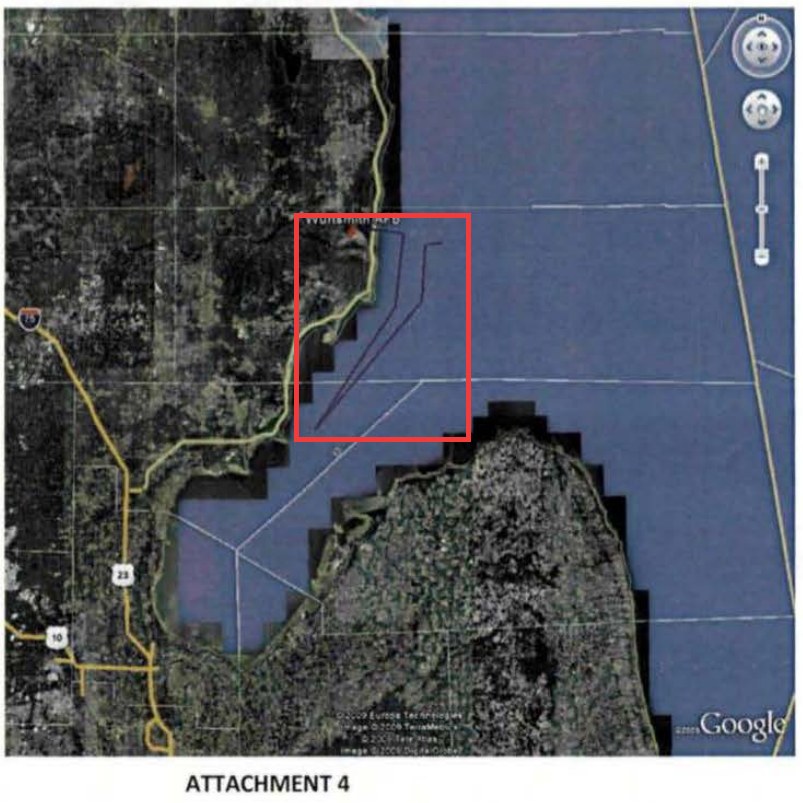
Wurtsmith. The account is BAASS's summary of earlier reporting. Late on October 30, 1975, several Security Police personnel reported an airborne object, described as a helicopter, near the base perimeter. The report follows it past the main gate, where the gate guard saw it, and the motor pool, where another enlisted member did, then toward the SAC Alert facility and the weapons storage area. It left to the east over Lake Huron.
A KC-135 tanker returning from a routine flight was tasked to find it, based on ground radar confirmation of the ground sightings. BAASS writes that air traffic control vectored the aircrew to the object over the lake, that they made contact and followed it toward Bay City, Michigan, and that they lost it there. Shortly after the tanker turned, the object reappeared, followed it for a short time, and left.
BAASS's assessment is measured. Three separate ground observers made the same basic observation, ground radar detected an unknown target near the alert facility, and the aircrew had visual and electronic contact. That makes the case "worthy of additional attention."
Loring. BAASS calls the Loring events "eerily similar" and extremely close in timing, with one major difference: no aerial sighting. Numerous ground personnel reported seeing the object, but an Air National Guard helicopter crew could not find it despite numerous attempts, with Canadian officials included on those airborne missions. The incidents sparked high-level message traffic from NORAD and SAC, and SAC moved its facilities to a higher alert level, which BAASS calls "an apparent acknowledgement of the events." The report also notes that the message traffic "would have been routine based on threats to SAC resources."
Minot. The June report's Minot section is a BAASS investigator's summary of reports he had been given or located. Its most quoted figure comes from an incident dated only to 1966 or 1967: at least one object flew over several missile silos while security personnel watched, and the report went to SAC headquarters over the Primary Alerting System, an open line. Because SAC relayed it back to the silos, and each silo had two officers, the investigator counts at least 300 unidentified silo officers who heard it. That is arithmetic, not a headcount, and those officers heard a relay rather than necessarily seeing anything.
The investigator also corrects his own file: a report dated October 28, 1956, about a B-52 crew and a bright light, is actually the October 24, 1968 event, with identical contents and only the date in error.
The reality check. BAASS identified twelve known Wurtsmith witnesses and made 20 to 25 calls to re-interview them. Only two were interviewed. One had difficulty remembering an incident from almost 35 years earlier and said it was not a "big thing," adding that small planes often "buzzed" the base.
What the document does not say
They do not identify any of the objects, and they do not claim any missile was affected. The Loring section gives no date for its events, only that their timing was extremely close to Wurtsmith's. The Wurtsmith narrative never names the original reports it summarizes, so a reader cannot tell whether the radar and aircrew accounts come from one file or several. And the alert reading is BAASS's interpretation, not a stated fact.
Why it matters
These are not new sightings. They are a contractor, more than three decades later, treating Cold War base incidents as a research program: collecting old reports, mapping events and counting witnesses. The files preserve both the dramatic accounts and the moments that undercut them: a witness who shrugs, a date the investigator corrects, a helicopter crew that finds nothing. They show what the contractor thought worth chasing in 2009, and how far its own evidence went.
Source notes
Document box
- Files
- DOW-UAP-D170 (BAASS Monthly Report, April 2009) and DOW-UAP-D171 (BAASS Monthly Report, June 2009)
- Author
- Bigelow Aerospace Advanced Space Studies (BAASS), contractor to the Defense Intelligence Agency
- Periods
- April 1 to 30, 2009 (D170); June 1 to 30, 2009 (D171)
- Release
- PURSUE Release 07, Oct 23, 2026
- Primary sources
- DOW-UAP-D170 (PDF) · DOW-UAP-D171 (PDF)
Related files
Headlines and briefs on UAP Wire are editorial summaries of the published records. The primary sources control.